
Heritage Ranch, CA
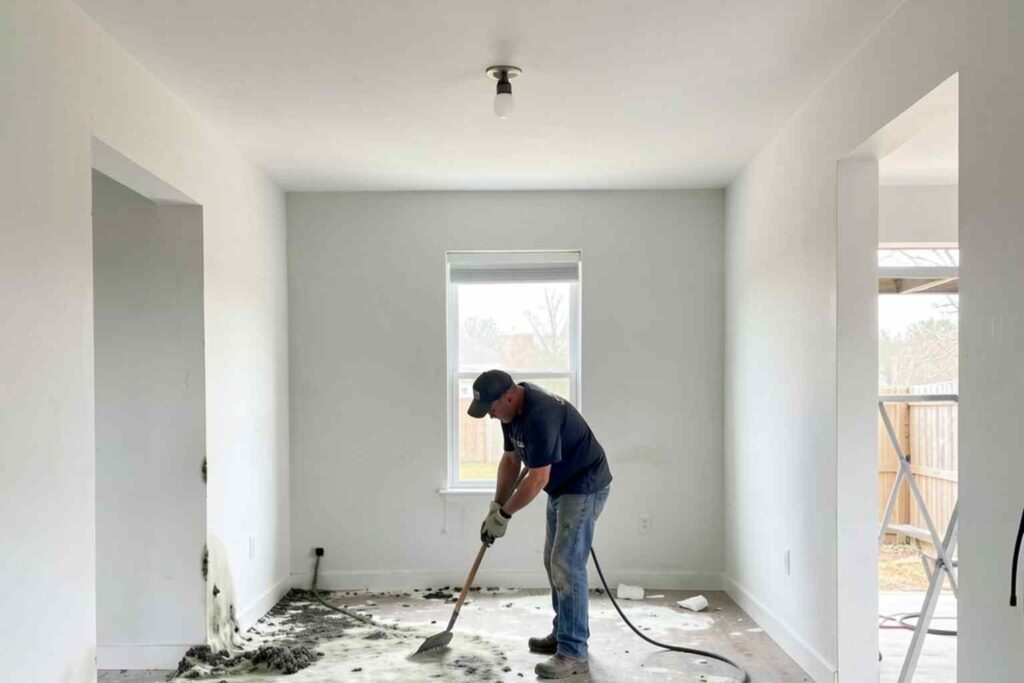
Our Emergency Flood Cleanup Process
Step 1: Emergency Contact & Immediate Dispatch (0-15 Minutes) When you call Rock Solid, we answer immediately, even at 3 AM. We gather critical information: What flooded? How much water? Is it still flowing? We dispatch our nearest team while you’re on the phone.
Step 2: Arrival & Safety Assessment (15-60 Minutes) Our certified technicians arrive with truck-mounted extraction equipment and assess safety hazards like electrical risks, structural stability, and contamination levels. We stop the water source if possible or coordinate with emergency plumbers.
Step 3: Water Extraction (1-4 Hours) Using powerful submersible pumps (3,000+ gallons/hour capacity) and industrial wet vacuums, we remove standing water. For severe floods, we may extract thousands of gallons. Speed matters—the longer water sits, the more it spreads into walls, under flooring, and into structural cavities.
Step 4: Moisture Detection & Mapping (During Extraction) We use thermal imaging cameras and moisture meters to find hidden water you can’t see—inside walls, under tile, in ceiling cavities. This prevents “hidden damage” that causes problems weeks later.
Step 5: Structural Drying Setup (Same Day) We strategically place:
- Air movers (industrial fans) – Create airflow across wet surfaces
- Commercial dehumidifiers – Remove moisture from the air (150+ pints/day capacity)
- Specialty equipment – Injectidry systems for hardwood floors, wall cavity drying equipment
Step 6: Monitoring & Adjustment (Days 2-5) We return daily to check moisture readings, adjust equipment, and document progress. Most flood situations require 3-5 days of drying time, though severe cases may take longer.
Step 7: Final Inspection & Content Restoration Once moisture levels return to normal (12-15% for wood, <1% for concrete), we remove equipment, clean salvageable belongings, and prepare for any necessary reconstruction.
Why 24-Hour Response Matters
Hour 1-4: Water actively spreads. Porous materials absorb moisture. Electrical hazards exist.
Hour 4-24: Water wicks up walls. Wood begins swelling. Dyes from carpets transfer to other surfaces.
Hour 24-48: Mold spores begin colonizing on wet materials. Odors develop. Structural weakening accelerates.
Hour 48+: Mold growth visible to naked eye. Permanent staining occurs. Reconstruction costs double or triple.
Professional flood cleanup within the first few hours can save 50-70% of materials that would otherwise require replacement.

Rapid Emergency Response
When you call Rock Solid, we answer, day or night. Our team arrives quickly to assess damage, stop water sources, and begin mitigation. In water damage situations, every hour counts, and we treat your emergency with the urgency it deserves.

Advanced Equipment & Techniques
We invest in the latest restoration technology: thermal imaging cameras for hidden moisture detection, commercial dehumidifiers, air scrubbers, hydroxyl generators for odor removal, and moisture meters for precise monitoring. This equipment allows us to complete restoration faster and more thoroughly than basic methods.

Certified Restoration Professionals
Our technicians hold certifications in water damage restoration, mold remediation, and fire damage cleanup. We follow Institute of Inspection, Cleaning and Restoration Certification (IICRC) standards, ensuring your property receives care that meets industry best practices.
Local Knowledge, Personal Service
As a locally-owned business based in Heritage Ranch, we understand Paso Robles area properties, from historic downtown buildings to modern Westside homes. We’re your neighbors, and we care about our community’s recovery.
How Much Does Emergency Flood Cleanup Cost in Paso Robles?
Flood cleanup costs depend on:
- Water volume – A flooded bathroom costs $2,000-4,000; a flooded basement $5,000-15,000+
- Water category – Clean water (supply line) vs. contaminated water (sewage) affects pricing
- Materials affected – Hardwood floors cost more to dry than concrete
- Time to call – Immediate response costs less than waiting days
Most homeowners insurance policies cover sudden flood events like burst pipes. We work directly with your insurance adjuster and provide detailed documentation to support your claim.
Flood Cleanup vs. Water Damage Restoration: What’s the Difference?
Flood cleanup specifically addresses large-volume water intrusion requiring immediate pumping and extraction. Water damage restoration is the broader process including drying, sanitizing, and rebuilding. We provide both, starting with emergency flood cleanup and continuing through complete restoration.
Can I Clean Up a Flood Myself?
Small amounts of clean water (less than 10 gallons from a supply line) may be manageable with shop vacs and fans if addressed within 1-2 hours. However, most floods involve:
- More water than household equipment can handle
- Contaminated water requiring sanitization
- Hidden moisture needing professional detection
- Structural damage you can’t see or access
DIY flood cleanup typically leads to mold problems 2-4 weeks later, ultimately costing more than professional service would have initially.
Does Insurance Cover Emergency Flood Cleanup?
Usually covered:
- Burst pipe floods
- Water heater ruptures
- Appliance malfunctions
- Storm water entering through roof damage
Usually NOT covered:
- Flooding from external sources (requires separate flood insurance)
- Gradual leaks or maintenance issues
- Groundwater seepage
We document everything for your insurance company: photos of the source, moisture readings, extraction volumes, and equipment logs. Many clients pay only their deductible when we bill insurance directly.
Serving Paso Robles Area Communities
Primary Service Areas:
- Heritage Ranch – Templeton – Atascadero – San Miguel – Shandon – Paso Robles (East & West)
Extended Service Areas: We also respond to emergencies in Cambria, Morro Bay, Cayucos, and San Luis Obispo when local companies are unavailable.